

Quick answer
All ice cave access in Iceland requires participation in a paid guided tour; self-guided entry is not permitted at any time. Tours operate primarily between November and March when glacier temperatures stabilize the cave structures. Entrance to Vatnajökull National Park itself is free, but cave exploration demands specialized equipment and expert navigation provided exclusively by licensed operators.
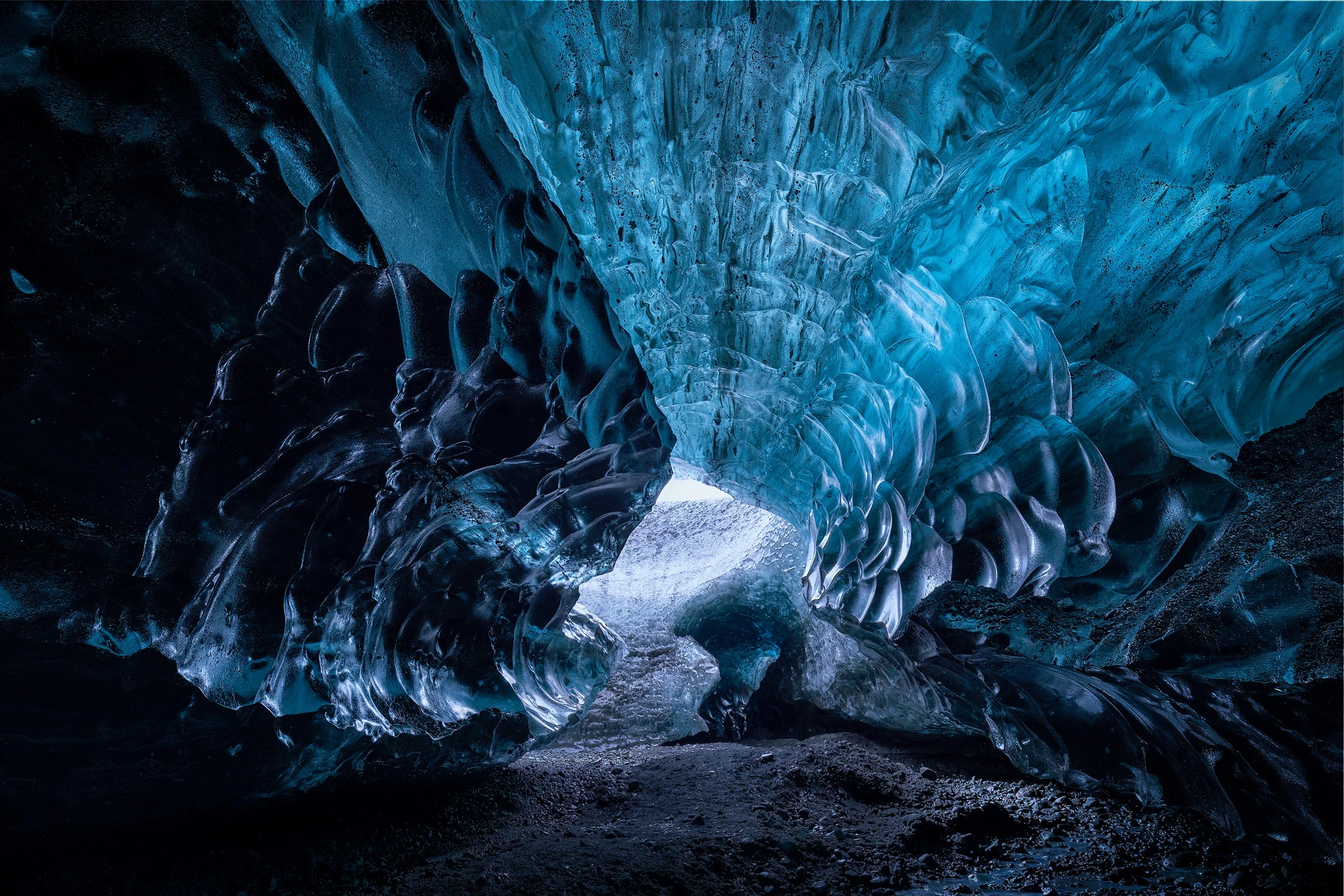
Vatnajökull's ice caves reshape themselves each summer as meltwater carves new tunnels and collapses older chambers. No two seasons produce identical formations, and the caves that exist in one winter may vanish entirely by the next. This constant transformation makes pre-scouting by professional guides essential before any group enters the glacier. An ice cave tour guide to Iceland must address the mandatory safety framework governing all glacier access. Icelandic law prohibits unaccompanied visitors from entering active ice formations due to collapse risk, hidden crevasses, and rapidly shifting structural integrity. Certified guides assess conditions daily, monitoring ice thickness, air temperature, and meltwater flow to determine whether a cave remains stable enough for human passage. Tours supply crampons, helmets, and ice axes as standard issue, and participants receive glacier-walking instruction before approaching the cave entrance. Most expeditions depart from staging points near Jökulsárlón glacier lagoon in South Iceland, where operators maintain equipment depots and coordinate group departures. The drive from Reykjavík spans approximately five hours, making overnight accommodation in the southeast region practical for visitors combining cave exploration with other glacier activities. Tour durations range from two to four hours depending on ice conditions and group mobility, with the actual time inside the cave typically limited to thirty to forty-five minutes to minimize environmental impact and manage group flow. Guided glacier expeditions in Iceland prioritize small group sizes to reduce tunnel congestion and allow guides to maintain close supervision in confined ice passages. Operators cap most tours at twelve to fifteen participants, and some specialist photography tours restrict groups to six or eight people. Weather conditions in Vatnajökull can shift abruptly, and guides retain authority to cancel or reroute expeditions if wind speeds exceed safe thresholds or visibility drops below operational minimums. The ice cave tour guide to iceland framework ensures that every visitor experiences the glacier's crystalline interiors without compromising structural safety or ecological preservation standards that protect Vatnajökull's fragile ice ecosystems.
“Vatnajökull's ice caves reshape themselves each summer as meltwater carves new tunnels and collapses older chambers.”
Optimal Timing for Your Ice Cave Tour Guide to Iceland
The optimal window for ice cave tours in Iceland is between November and March, when lower temperatures ensure the stability of the glacier structures. During this period, cold conditions allow for safer access to these dynamic environments.
November to January
Low densityCold with frequent snow ( -5°C to 2°C)
Short daylight hours provide more opportunities for observing glacier light. Visitors should prepare for rapidly changing visibility.
February to March
Moderate densityCold with variable winds (-3°C to 4°C)
This period offers longer daylight hours for cave exploration. Weather remains stable enough for consistent glacier trekking.
Weekday mornings
Low density—
Early tours often encounter fewer participants. This timing allows for a quieter experience within the Vatnajökull National Park locations.
Verdict: The best period for a visit is mid-winter, specifically February, by selecting a weekday morning departure.
Step-by-Step Ice Cave Tour Guide to Iceland for Visitors
Visiting an ice cave in Iceland requires booking a guided tour with a licensed operator, as independent access to glaciers is prohibited for safety reasons. The entire process—from reservation to returning from the cave—typically spans 3–4 hours including transport from the meeting point.
Book with a Licensed Operator
Reserve your spot through a certified tour company at least 2–3 days in advance during peak season (November–March). Many travelers mistakenly assume they can walk onto a glacier independently; all ice cave access in Vatnajökull National Park is strictly tour-guided.
Arrive at the Designated Meeting Point
Meet your group at the specified glacier parking area—most operators depart from Jökulsárlón glacier lagoon or Skaftafell—15 minutes before departure time. Late arrivals cannot join mid-tour due to safety protocols and group coordination on the glacier.
Gear Up with Provided Equipment
Guides distribute crampons, helmets, and ice axes; wear the crampons over your hiking boots and fasten the helmet chin strap securely. The most common error is loose crampon straps, which cause slips on ice and delays for the group.
Follow Your Guide onto the Glacier
Walk in single file behind the lead guide, stepping only where indicated and maintaining the group's pace. Wandering off-route or stopping for photos without permission risks hidden crevasses and jeopardizes the entire group's safety.
Enter and Explore the Ice Cave
Once inside, your guide will point out safe viewing areas and explain the cave's seasonal formation. Touching the walls or venturing beyond marked zones is prohibited—ice caves are unstable and can collapse without warning.
Return to the Meeting Point
Retrace your route with the guide, remove your gear at the parking area, and confirm your return transport if pre-arranged. Many visitors forget to collect personal items left in the tour vehicle; double-check before departure.
Understanding Costs in Your Ice Cave Tour Guide to Iceland
Access to the glacier area in Vatnajökull National Park is free of charge. However, entering an ice cave is only permitted as part of a paid professional guided tour.
There is no entrance fee to the glacier area, but travelers pay a variable cost for a guided tour based on the specific provider and duration.
Operational Hours for an Ice Cave Tour Guide to Iceland
The ice caves in Vatnajökull National Park are closed to independent visitors at all times. Access is restricted exclusively to authorized guided tours.
| Monday | Closed | |
|---|---|---|
| Tuesday | Closed | |
| Wednesday | Closed | |
| Thursday | Closed | |
| Friday | Closed | |
| Saturday | Closed | |
| Sunday | Closed |
Logistics for an Ice Cave Tour Guide to Iceland
Ice cave tours are located within Vatnajökull National Park in South Iceland. Access is only permitted via guided tour, so visitors must travel to designated assembly points typically reached via the Ring Road (Route 1).
Drive Route 1 (Ring Road) to Jökulsárlón glacier lagoon
Public transport to Jökulsárlón or Skaftafell
Meet tour operator at assigned assembly point
Preparation Checklist for an Ice Cave Tour Guide to Iceland
Glacier environments demand specific gear and documentation—confirm you have these before your scheduled tour.
-
Book your guided tour in advance — Ice cave access is only permitted with a professional guide, and popular slots fill quickly.
-
Bring waterproof outer layers and sturdy boots — Glacier conditions include ice melt, wind, and uneven frozen surfaces that require protective clothing.
-
Pack crampons or confirm tour provider supplies them — Walking on glacial ice requires metal traction devices for safe movement.
-
Carry a headlamp with fresh batteries — Natural light inside ice caves is limited, especially in winter months.
-
Wear thermal base layers and insulating mid-layers — Temperatures inside the caves remain below freezing year-round.
-
Bring a valid ID and tour confirmation — Operators verify bookings and may require identification for insurance purposes.
-
Check weather forecasts 24 hours before departure — Severe conditions can force last-minute tour cancellations or route changes.
Check availability
Frequently Asked Questions About Ice Cave Tours in Iceland
Everything you need to know about ice cave tour guide to iceland